How I turned IT Geeks’ website into its strongest portfolio asset, driving better brand recall, conversions, and search visibility
Project Type
Website Rebranding
Timeline
4 Months
Web Pages
31 Pages
Project at the glance
IT Geeks is an ecommerce website development company and a Shopify Partner. While the team was getting steady leads from the Shopify Partner Directory, many of them were dropping off after landing on the website. The work they were delivering for clients was solid, but the website was not telling that story clearly.
That gap is what I was hired to fix.
I worked on the website end to end, starting with understanding the business, the audience, and where users were getting stuck. From there, I refreshed the content across 31 pages, restructured the website flow, strengthened the SEO foundation, and partnered closely with the design and creative teams to make sure the messaging and visuals felt aligned.
The two major pages –
Shopify Partner directory landing page.
Visit Site ↗️
Home Page
Visit Site↗️
Let’s explore the project, my work, process, and results in detail.
About IT Geeks
IT Geeks is a Shopify Platinum Partner and a digital transformation agency. Founded in 2015, the company has been delivering top-tier services to Shopify and Shopify Plus clients from both D2C and B2B domain.
What sets IT Geeks apart is their grounded value and customer-first approach.
Problem Statement
The website failed to function as a credible business asset. Outdated content, generic messaging, and inconsistent brand identity diluted expertise, weakened trust, and created a confusing user journey that hurt both SEO performance and conversions.
Requirements
1. Copy, not content
IT Geeks’ leadership team knew what they wanted - a minimal copy, without missing anything. Every line had to be short, useful, and easy to understand, without extra explanations or filler.
2. One consistent brand identity
After the rebrand, the website needed to feel like one voice. The mistakes made till then - different spellings of business names on different pages, inconsistent messaging, disconnected look, had to be fixed.
3. A logical, research backed structure
The site was organised based on how people actually search, browse, and make decisions. Pages were placed and written with real user behaviour in mind, not assumptions.
4. Trust built into the page flow
IT Geeks ranked #1 on Shopify Partner Directory for the positive reviews. That kind of social proof must reflect on their website.
5. SEO that supports clarity
Search optimization mattered, but it could not make the content feel forced. Pages were structured for search engines while still reading smoothly for people.
6. Conversion focused by default
Every page needed a clear reason to exist. Users should always know what to do next, without feeling pushed or overwhelmed.
The Process
1. Creative Brief
I started by understanding what was actually broken and what truly needed fixing. This helped cut out unnecessary content early and focus only on what mattered.
2. Audits
I ran multiple audits. Website, brand name, SEO, and competitors. This stage shaped most major decisions, including locking the brand name as IT Geeks with a space instead of a hyphen. I reviewed the existing site to understand the business, services, gaps in messaging, SEO issues, and how users were moving through the site.
3. Structure, wireframes, and moodboards
I worked closely with the designer to make sure the copy and layout supported each other. At the same time, I coordinated with the marketing team on structure. This helped decide what deserved space on a page and what did not.
4. SEO planning
Before writing, I mapped page intent, keywords, headings, and internal links. The goal was simple. Make the content easy to find and easy to read.
5. Writing the copy
I wrote clear, minimal copy focused on expertise, trust, and clarity. No filler. No generic agency lines.
6. Proofreading and consistency checks
I reviewed everything for brand naming, tone, grammar, and flow, making sure the site felt consistent from page to page.
7. Feedback and edits
Feedback was taken in clear rounds. Edits were made carefully, without drifting away from the core direction.
Throughout the project, I worked in an Agile way. I kept stakeholders updated at every step, shared audits, research, and drafts as we moved forward, and made changes early instead of at the end.
The Transformation
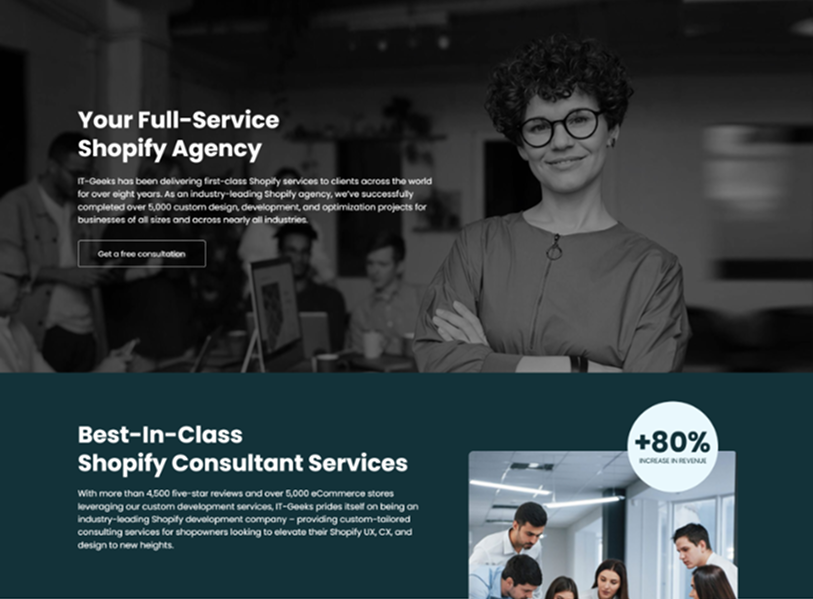
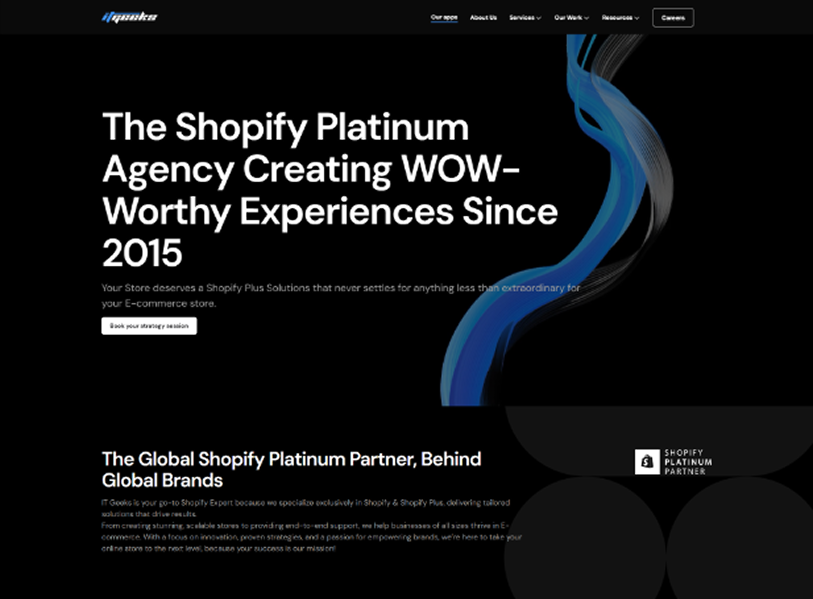
Outcomes
- The website now reflects the quality of work IT Geeks delivers for its clients.
- Brand inconsistencies were removed across all pages, making the site feel more credible and professional.
- Pages became clearer and easier to navigate, helping visitors understand the business quickly.
- Trust signals such as partnerships, experience, and proof points became easier to spot during the user journey.
- Not only the conversion rate, but lead quality also improved, as visitors clearly know everything they need to.
- Internal teams felt more confident sharing the website as a reference and portfolio piece.
Why This Project Says the Most About My Work
1. End to end ownership
I was hired as a content writer, but worked as a content strategist. I took ownership of content, structure, design alignment, and outcomes.
2. Human content
I focused on writing that feels clear and natural to read, without generic or AI heavy language.
3. Strong cross team collaboration
I worked closely with design, marketing, and stakeholders to align decisions early and avoid last minute changes.
4. Beyond just the website
My work included website copy, boilerplates for business profiles, meta tags for all pages, social platform bios, PR content, and more. It was a complete digital branding exercise.
If I’d do it again, what would I do differently
1. Refine the structure further
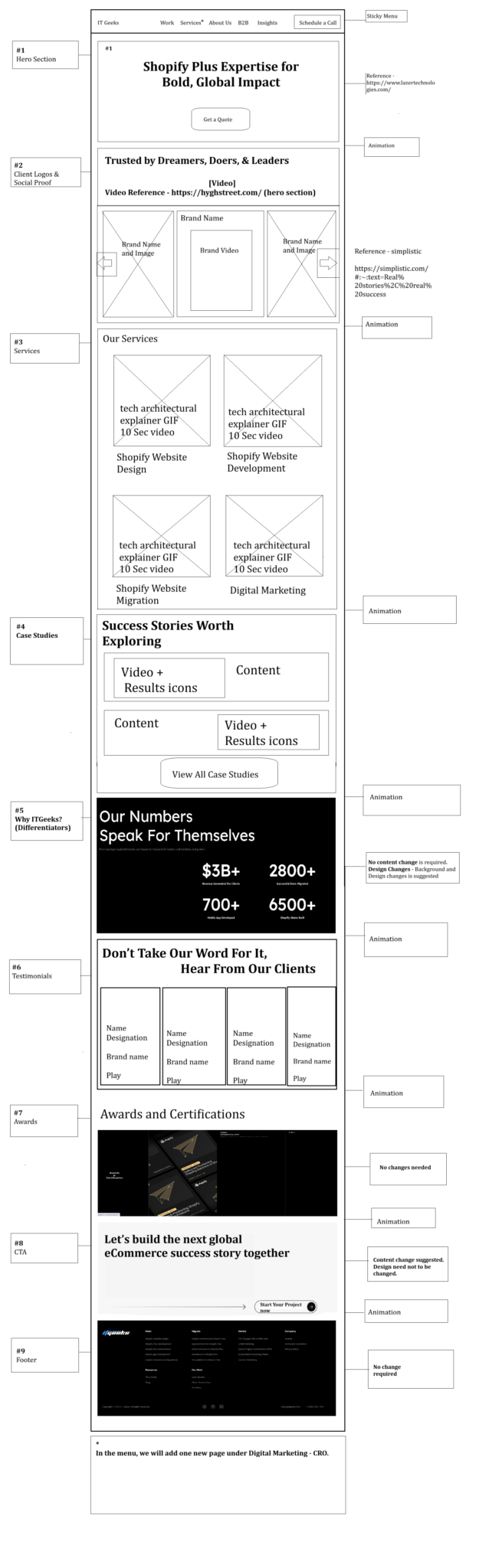
Now that the site has been live for a year, I would refine the structure based on newer user behaviour and add sections that support evolving business goals. Already provided wireframe for the updated structure.
2. Plan for iteration earlier
I would build in clearer checkpoints for post launch improvements, so updates feel like a continuation rather than a revision.
3. Bring sales conversations in sooner
Spending more time with the sales team early on would help shape messaging even closer to real buyer objections and questions.
4. Plan post launch optimisation upfront
I would set aside time for structured post launch reviews, instead of treating improvements as ad hoc updates.
Looking for a content strategist who can lead your website redo, and a lot more?
Then you’re looking for me.
Let’s connect.
Click To Copy
Copied.✨